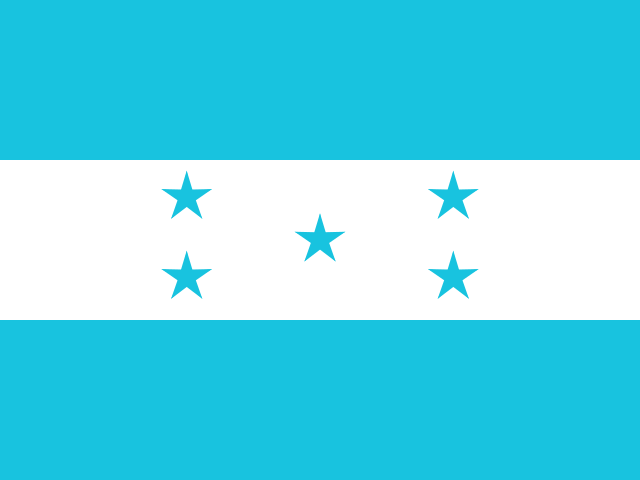
Honduras is a Central American country bordered by Guatemala, El Salvador, and Nicaragua, with coastlines on both the Caribbean Sea and the Pacific Ocean. It is known for its rich Maya heritage, particularly the ancient city of Copán, and for its extensive tropical forests and coral reefs. The Bay Islands off its Caribbean coast are renowned worldwide for scuba diving.
- Capital
- Tegucigalpa
- Continent
- Americas
- Region
- Central America
- Area
- 112,492 km²
- Coordinates
- 15° N, 87° W
- Languages
- Spanish
- Currency
- HNL L
- Domain
- .hn
- Calling code
- +504
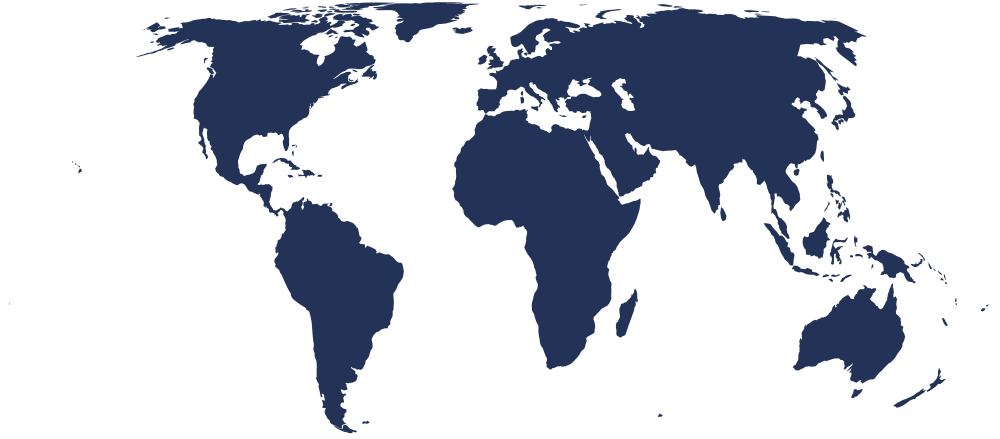
On the world map
Bordering countries
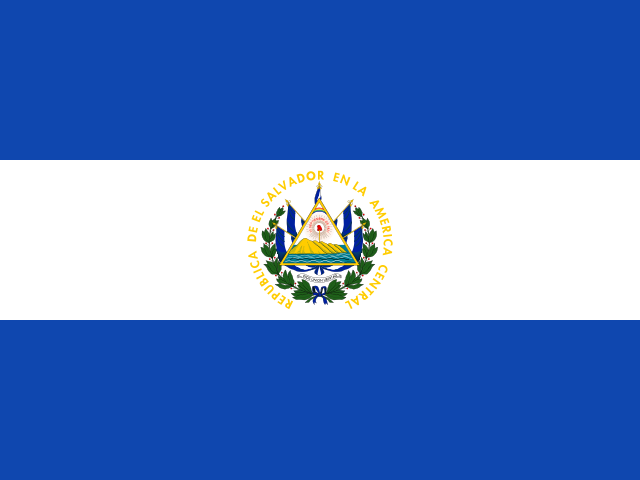 El Salvador
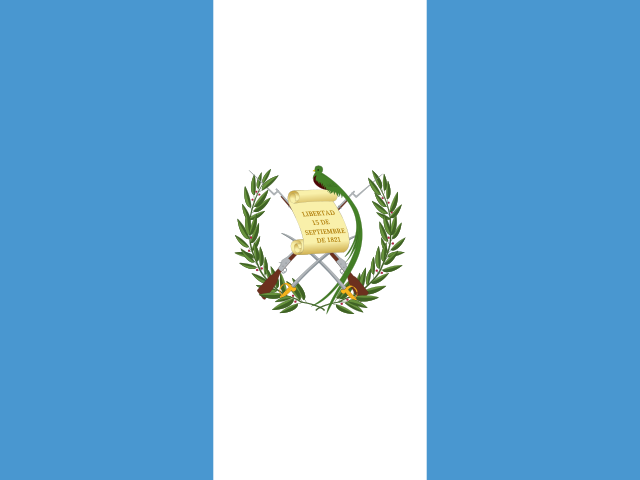 Guatemala
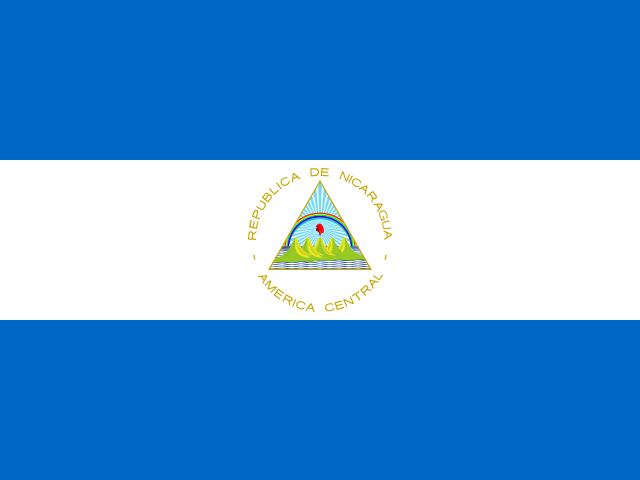 Nicaragua
Country facts
- The ancient Maya city of Copán, a UNESCO World Heritage Site, is famous for its intricately carved stelae and hieroglyphic stairway.
- Honduras has the largest area of cloud forest in Central America, providing habitat for rare species including the resplendent quetzal.
- The country's national bird is the scarlet macaw, a brilliantly colored parrot found in its tropical forests.
- Honduras gained independence from Spain on September 15, 1821, along with several other Central American nations.
- Spanish is the official language of Honduras, and the country has a rich tradition of indigenous cultures including the Lenca and Garifuna peoples.
Capital facts
- Tegucigalpa is one of the few capital cities in the world that was never planned on a grid, giving it a distinctly irregular street layout shaped by its hilly terrain.
- The city sits in a mountain valley at an elevation of roughly 1,000 meters above sea level, giving it a mild climate year-round.
- The National Basilica of Suyapa, home to a tiny but venerated statue of the Virgin Mary, is one of the most important Catholic pilgrimage sites in Central America.
- Tegucigalpa served as the capital of Honduras since 1880, when it replaced Comayagua in that role.
- The city's name is believed to derive from a indigenous phrase meaning 'silver hills,' reflecting the silver mining that once drove the region's economy.