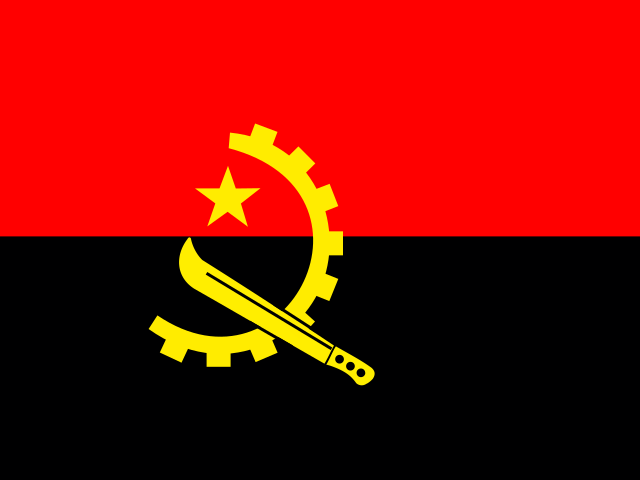
Angola is a large country on the southwestern coast of Africa, bordered by the Democratic Republic of the Congo, Zambia, and Namibia. It is known for its rich oil reserves, which drive much of its economy, as well as its remarkable biodiversity and dramatic landscapes. The country also has a deep cultural heritage shaped by its Bantu-speaking peoples and its history as a major center of the transatlantic slave trade.
- Capital
- Luanda
- Continent
- Africa
- Region
- Middle Africa
- Area
- 1,246,700 km²
- Coordinates
- 13° S, 19° E
- Languages
- Portuguese
- Currency
- AOA Kz
- Domain
- .ao
- Calling code
- +244
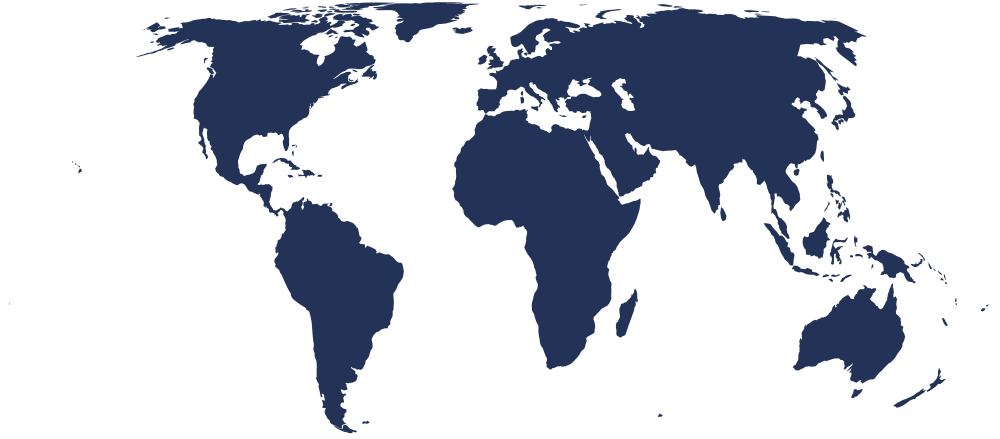
On the world map
Bordering countries
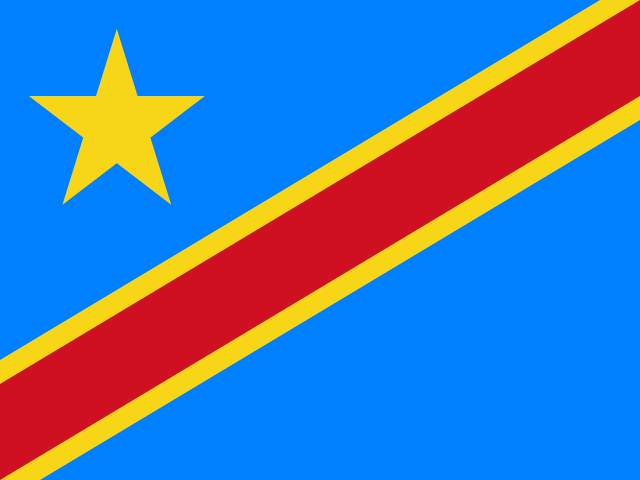 DR Congo
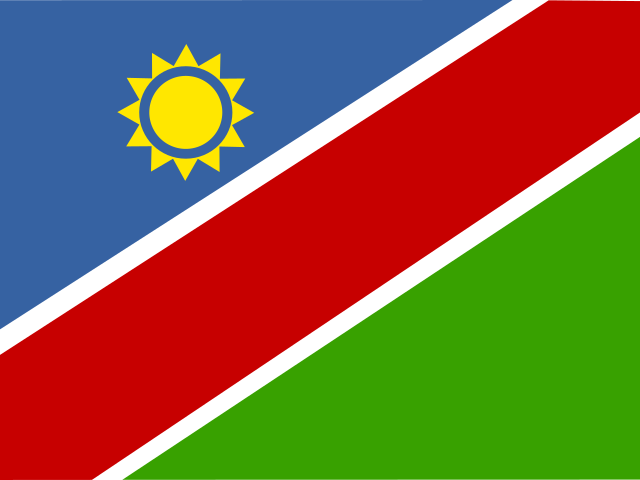 Namibia
 Republic of the Congo
 Zambia
Country facts
- Portuguese is the official language of Angola, a legacy of nearly 500 years of Portuguese colonial rule that ended in 1975.
- Angola is home to the giant sable antelope, a striking and endangered animal found nowhere else on Earth.
- The Kalandula Falls, one of Africa's largest waterfalls by volume, is located in Angola's Malanje Province.
- Angola fought a devastating civil war from independence in 1975 until 2002, one of the longest conflicts in African history.
- The country is one of Africa's leading producers of diamonds, which alongside oil form the backbone of its export economy.
Capital facts
- Luanda was founded by Portuguese explorer Paulo Dias de Novais in 1575, making it one of the oldest European-established cities in sub-Saharan Africa.
- The Fortress of São Miguel, built in the 16th century, overlooks Luanda Bay and now serves as a military museum.
- Luanda sits along a natural bay on the Atlantic coast, giving it a scenic waterfront known as the Marginal.
- The city served as a major hub for the transatlantic slave trade, with millions of enslaved Africans departing from its shores.
- Luanda is the cultural and economic heart of Angola, home to museums, markets, and the country's main international airport.