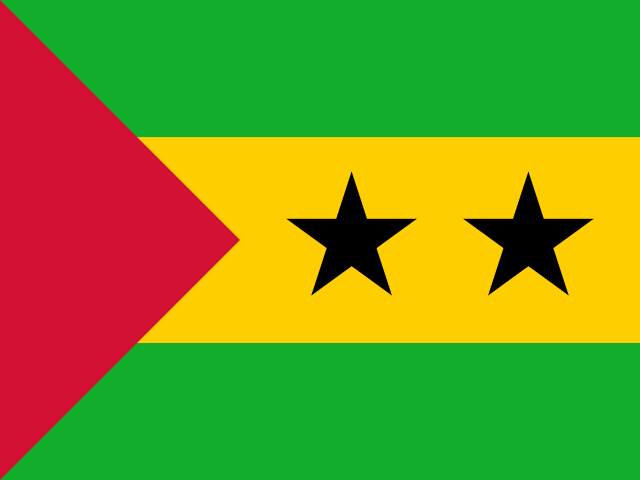
São Tomé and Príncipe is a small island nation in the Gulf of Guinea, off the west coast of Central Africa. It is one of Africa's smallest countries and is known for its lush rainforests, rich biodiversity, and high-quality cocoa. The two main islands were uninhabited before Portuguese settlers arrived in the 15th century, giving the country a unique Creole culture and history.
- Capital
- São Tomé
- Continent
- Africa
- Region
- Middle Africa
- Area
- 964 km²
- Coordinates
- 1° N, 7° E
- Languages
- Portuguese
- Currency
- STN Db
- Domain
- .st
- Calling code
- +239
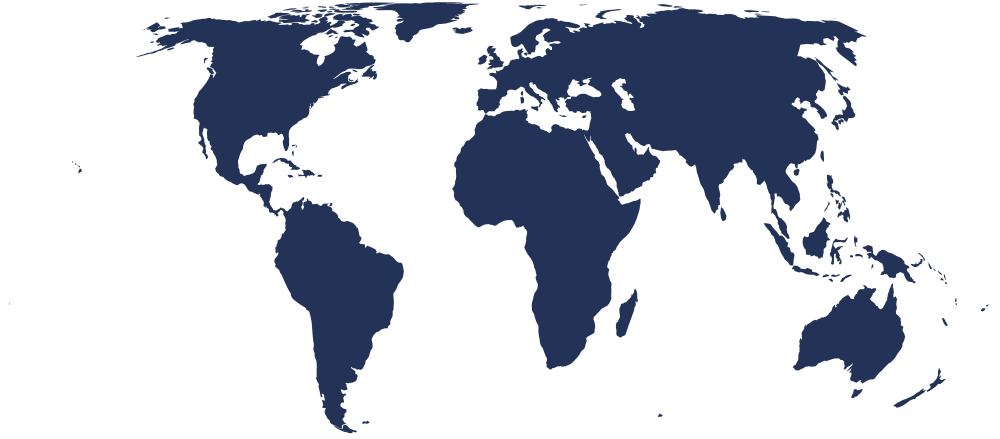
On the world map
Bordering countries
No land borders — this is an island nation.
Country facts
- The islands were uninhabited when Portuguese explorers arrived around 1470, making it one of the first places in sub-Saharan Africa colonized by Europeans.
- São Tomé and Príncipe gained independence from Portugal on July 12, 1975.
- The country straddles the equator, with Príncipe island lying just to the north of it.
- Cocoa was historically so important to the economy that the islands were once nicknamed the 'Chocolate Islands.'
- The national language is Portuguese, but many locals also speak Forro, Angolar, and other Creole languages unique to the islands.
Capital facts
- São Tomé city was founded by Portuguese colonists in the late 15th century and is one of the oldest European-founded cities in sub-Saharan Africa.
- The city serves as the country's political, economic, and cultural center.
- The Cathedral of São Tomé, built in the 16th century, is one of the oldest cathedrals in sub-Saharan Africa.
- The Fortaleza de São Sebastião, a Portuguese-built fortress from the 16th century, now houses the national museum.
- The city's waterfront market is a lively hub where locals trade fresh fish, tropical fruits, and local goods.