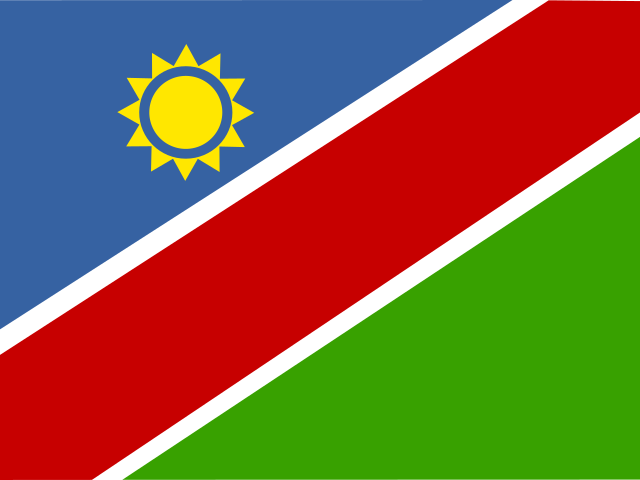
Namibia is a country in southwestern Africa, bordered by the Atlantic Ocean to the west and South Africa to the south. It is renowned for the Namib Desert, one of the oldest deserts on Earth, stretching along its entire coastline. The country is also celebrated for its dramatic landscapes, diverse wildlife, and some of the best stargazing conditions in the world.
- Capital
- Windhoek
- Continent
- Africa
- Region
- Southern Africa
- Area
- 825,615 km²
- Coordinates
- 22° S, 17° E
- Languages
- Afrikaans, German, English, Herero, Khoekhoe, Kwangali, Lozi, Ndonga, Tswana
- Currency
- NAD $, ZAR R
- Domain
- .na
- Calling code
- +264
On the world map
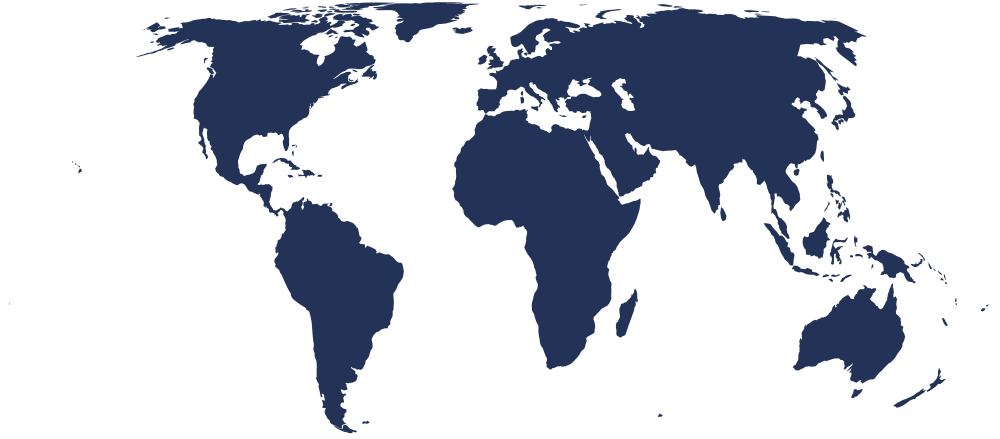
Bordering countries
 Angola
 Botswana
 South Africa
 Zambia
Country facts
- Namibia gained independence from South Africa on 21 March 1990, becoming one of the last African nations to do so.
- The Namib Desert is estimated to be around 55 million years old, making it one of the oldest deserts on the planet.
- Namibia has one of the lowest population densities in the world, with vast stretches of land inhabited by very few people.
- Etosha National Park, one of Africa's great wildlife reserves, is home to elephants, lions, rhinos, and hundreds of bird species.
- Namibia's official language is English, though Oshiwambo, Afrikaans, and several other languages are widely spoken across the country.
Capital facts
- Windhoek was established as the capital of German South West Africa in 1890 by German colonial administrator Curt von François.
- The city sits at an elevation of around 1,650 metres above sea level, giving it a mild and pleasant climate year-round.
- Windhoek's Christ Church, completed in 1910, is a striking Lutheran landmark and one of the most recognisable buildings in the city.
- The city is home to the National Museum of Namibia, which documents the country's natural history and independence struggle.
- Windhoek is known for its clean streets, well-organised layout, and relatively high standard of living compared to many African capitals.