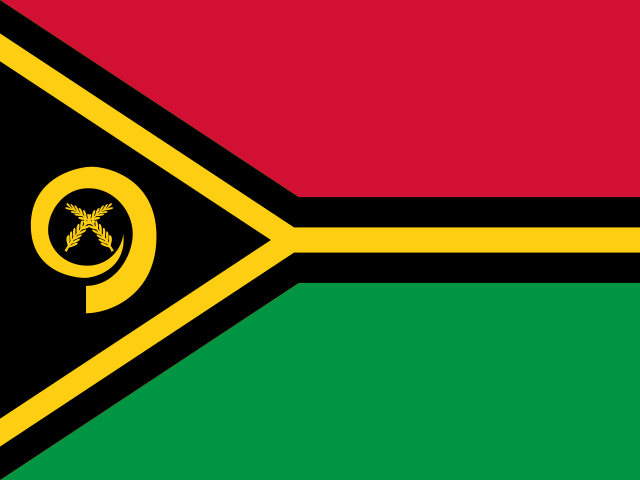
Vanuatu is an archipelago nation of roughly 80 islands scattered across the South Pacific Ocean, northeast of Australia. It is renowned for its active volcanoes, pristine coral reefs, and remarkable cultural diversity. The country is home to one of the world's highest concentrations of languages per capita, reflecting its many distinct indigenous communities.
- Capital
- Port Vila
- Continent
- Oceania
- Region
- Melanesia
- Area
- 12,189 km²
- Coordinates
- 16° S, 167° E
- Languages
- Bislama, English, French
- Currency
- VUV Vt
- Domain
- .vu
- Calling code
- +678
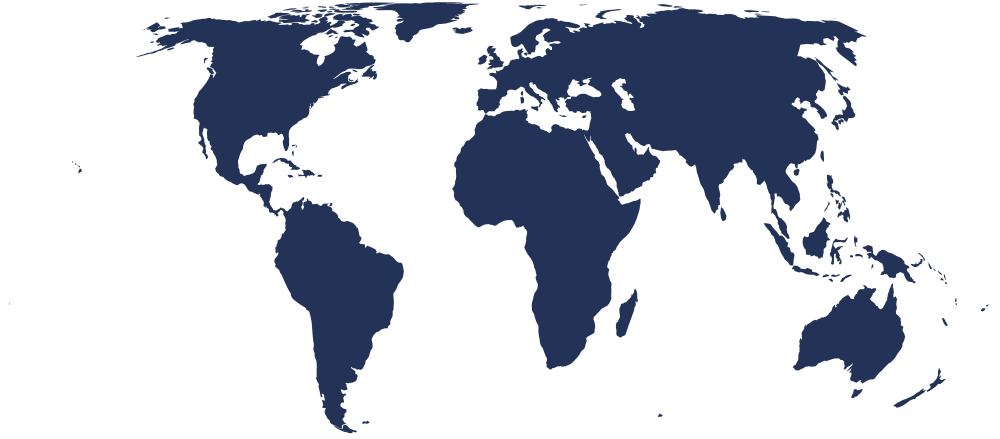
On the world map
Bordering countries
No land borders — this is an island nation.
Country facts
- Vanuatu gained independence from joint British and French colonial rule in 1980, making it one of the Pacific's newer nations.
- The islands are home to Bislama, a creole language that serves as the national lingua franca alongside English and French.
- Mount Yasur on Tanna Island is one of the world's most accessible active volcanoes, attracting visitors who can walk close to its rim.
- Vanuatu has over 100 distinct indigenous languages, giving it one of the highest language densities of any country on Earth.
- The traditional land-diving ceremony on Pentecost Island, known as Naghol, is considered an ancient forerunner of modern bungee jumping.
Capital facts
- Port Vila is located on the island of Efate and serves as Vanuatu's political, economic, and cultural hub.
- The city's waterfront market is a lively gathering place where locals sell fresh tropical produce, fish, and handcrafted goods.
- Port Vila's natural harbour made it a strategically important base during World War II for Allied forces in the Pacific.
- The Vanuatu Cultural Centre in Port Vila houses important collections of traditional artifacts, carvings, and historical records.
- Port Vila is known for its duty-free shopping, reflecting Vanuatu's status as a tax haven that attracts regional tourism and business.