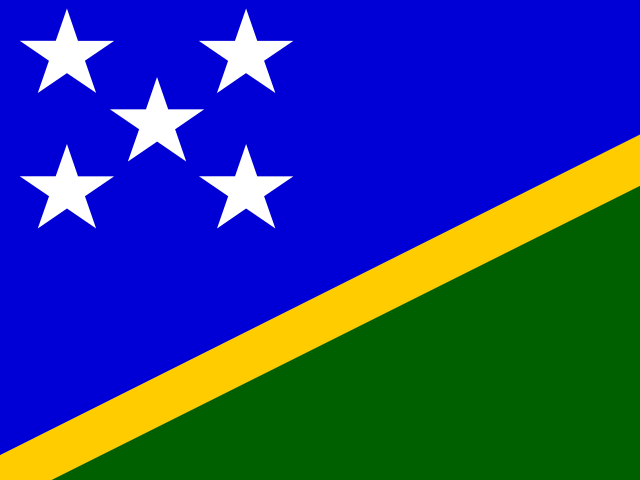
The Solomon Islands is an archipelago nation in the southwestern Pacific Ocean, east of Papua New Guinea, made up of hundreds of islands and atolls. It is known for its extraordinary biodiversity, vibrant coral reefs, and rich Melanesian culture. The islands also saw intense fighting during World War II, particularly the famous Battle of Guadalcanal.
- Capital
- Honiara
- Continent
- Oceania
- Region
- Melanesia
- Area
- 28,896 km²
- Coordinates
- 8° S, 159° E
- Languages
- English
- Currency
- SBD $
- Domain
- .sb
- Calling code
- +677
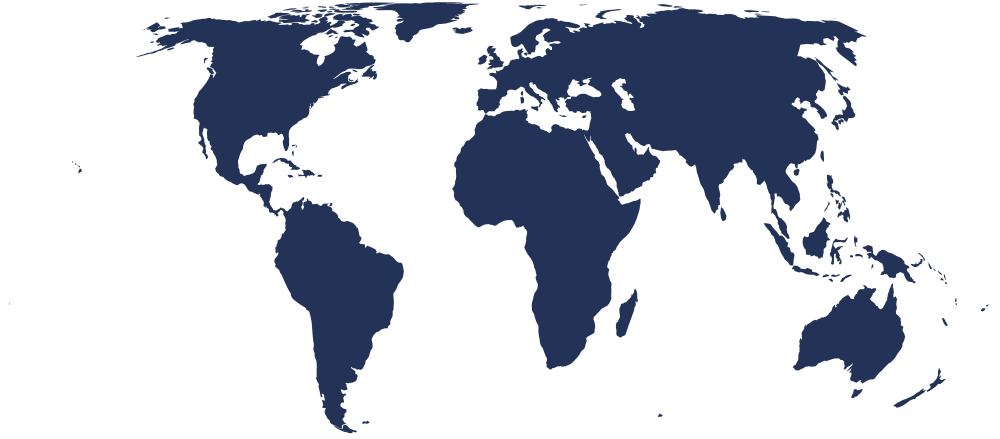
On the world map
Bordering countries
No land borders — this is an island nation.
Country facts
- The Solomon Islands has over 900 islands, though only a fraction are permanently inhabited.
- More than 70 local languages are spoken across the islands, making it one of the most linguistically diverse nations on Earth.
- The country gained independence from British rule on 7 July 1978.
- Its rainforests are home to unique wildlife, including many bird species found nowhere else in the world.
- Traditional woven shell money, called tafuliae, is still used in some communities for ceremonies and bride price exchanges.
Capital facts
- Honiara is located on the north coast of Guadalcanal, the largest island in the country.
- The city developed after World War II on the site of a former American military base called Henderson Field.
- Honiara's central market is a lively hub where people from across the islands trade fresh produce, fish, and crafts.
- The National Museum of the Solomon Islands in Honiara preserves traditional artefacts and cultural heritage from across the archipelago.
- Point Cruz, a small peninsula in central Honiara, is traditionally said to be where Spanish explorer Álvaro de Mendaña erected a cross during his 1568 voyage.