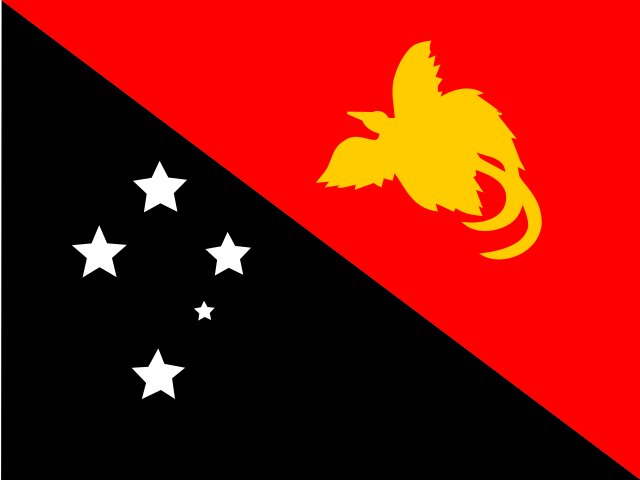
Papua New Guinea occupies the eastern half of the island of New Guinea in the southwestern Pacific Ocean, just north of Australia. It is renowned for its extraordinary cultural diversity, with hundreds of distinct ethnic groups inhabiting dense rainforests and rugged highlands. The country is also celebrated for its rich biodiversity, including many unique species of birds, such as the spectacular birds of paradise.
- Capital
- Port Moresby
- Continent
- Oceania
- Region
- Melanesia
- Area
- 462,840 km²
- Coordinates
- 6° S, 147° E
- Languages
- English, Hiri Motu, Tok Pisin
- Currency
- PGK K
- Domain
- .pg
- Calling code
- +675
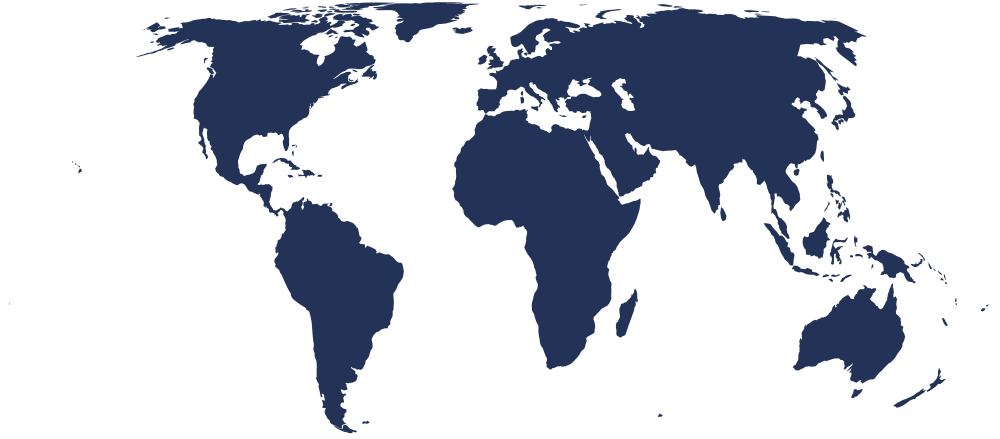
On the world map
Bordering countries
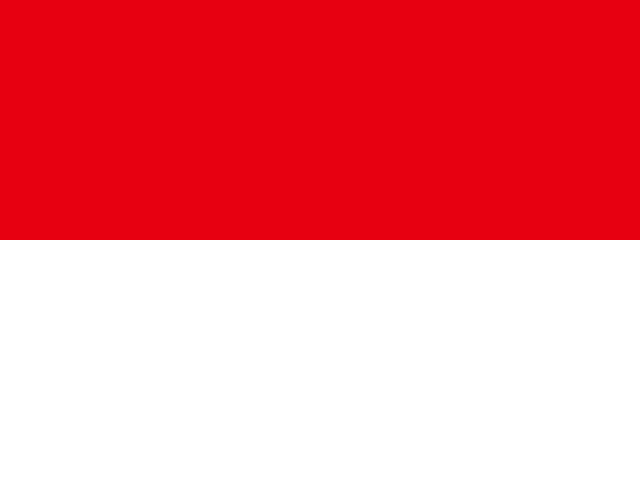 Indonesia
Country facts
- Papua New Guinea is home to over 800 distinct languages, making it the most linguistically diverse country on Earth.
- The country gained independence from Australian administration on 16 September 1975.
- Its rainforests are among the largest remaining tropical forests in the world and shelter a vast range of endemic wildlife.
- The bird of paradise, which appears on the national flag and coat of arms, is a powerful symbol of national identity.
- Traditional sing-sing festivals, where communities gather in elaborate costumes and perform ancestral songs and dances, remain an important part of cultural life.
Capital facts
- Port Moresby is located on the southeastern coast of the island of New Guinea, on a natural harbor that attracted early European settlers.
- The city was named after British naval officer Captain John Moresby, who charted the harbor in 1873.
- During World War II, Port Moresby served as a vital Allied base in the Pacific campaign against Japanese forces.
- The National Museum and Art Gallery in Port Moresby houses significant collections of traditional artifacts and contemporary Papua New Guinean art.
- Waigani, a planned suburb of Port Moresby, serves as the administrative heart of the country and houses the National Parliament building.