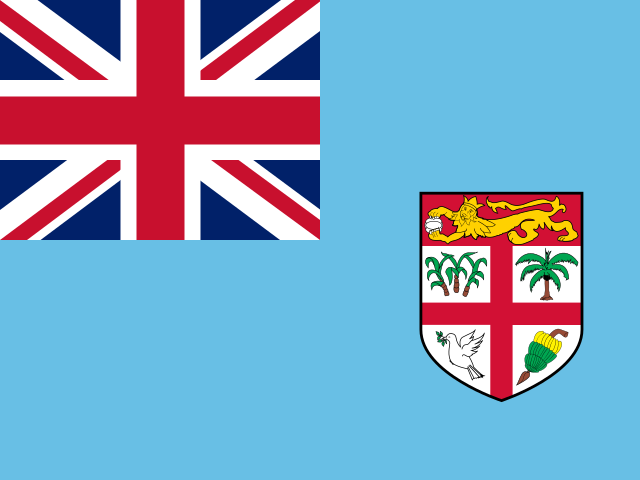
Fiji is an archipelago of more than 300 islands located in the South Pacific Ocean, roughly halfway between New Zealand and Hawaii. It is renowned for its crystal-clear lagoons, coral reefs, and lush tropical rainforests. Fiji is also one of the most culturally diverse nations in the Pacific, shaped by indigenous Fijian, Indo-Fijian, and other influences.
- Capital
- Suva
- Continent
- Oceania
- Region
- Melanesia
- Area
- 18,272 km²
- Coordinates
- 18° S, 175° E
- Languages
- English, Fijian, Fiji Hindi
- Currency
- FJD $
- Domain
- .fj
- Calling code
- +679
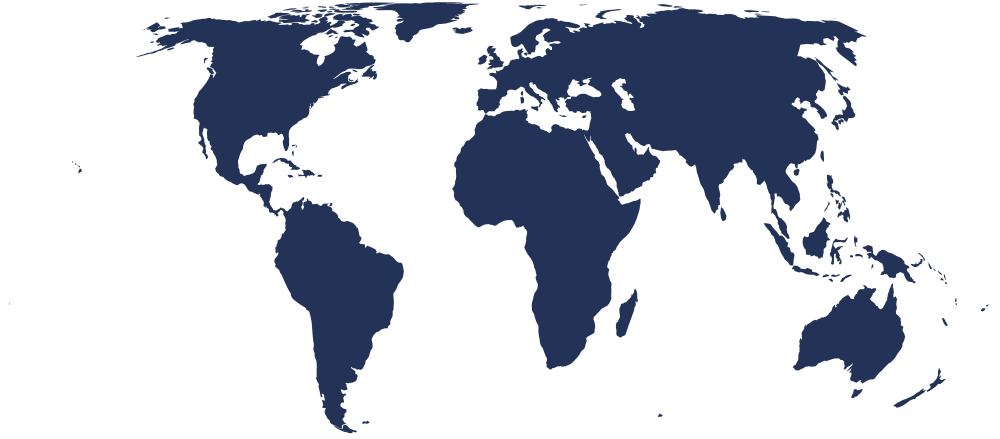
On the world map
Bordering countries
No land borders — this is an island nation.
Country facts
- Fiji gained independence from British colonial rule on October 10, 1970.
- The country is made up of over 300 islands, but only about 100 of them are permanently inhabited.
- Fijian rugby sevens is a national passion, and the team won Fiji's first Olympic gold medal at the 2016 Rio Games.
- Fiji has two official indigenous languages, Fijian and Hindustani, alongside English.
- The Tagimoucia flower, found only on the island of Taveuni, is Fiji's national flower and features on the country's coat of arms.
Capital facts
- Suva became the capital of Fiji in 1877, replacing Levuka on the island of Ovalau.
- It is situated on the southeastern coast of Viti Levu, Fiji's largest island.
- The Fiji Museum in Suva, founded in 1904, houses one of the Pacific's most significant collections of cultural artifacts.
- Suva is one of the largest cities in the Pacific and serves as a major regional hub for trade and diplomacy.
- The city receives heavy rainfall throughout the year, making it one of the wettest capital cities in the Pacific region.