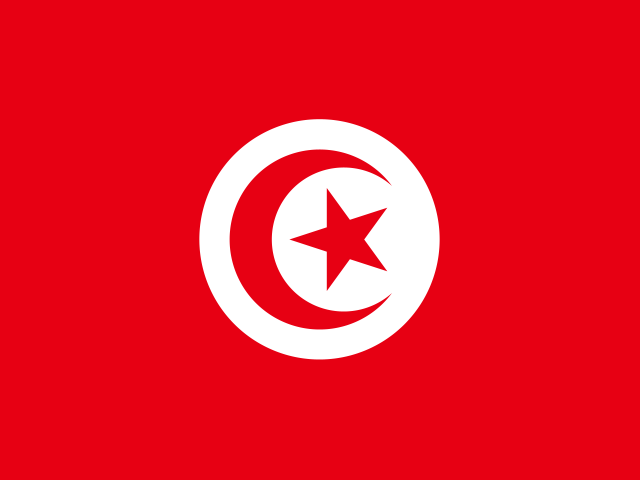
Tunisia is a North African country bordered by Algeria to the west, Libya to the east, and the Mediterranean Sea to the north. It is known for its ancient ruins, golden beaches, and Saharan landscapes. The country served as the heart of the ancient Carthaginian civilization and later became a key part of the Roman Empire.
- Capital
- Tunis
- Continent
- Africa
- Region
- Northern Africa
- Area
- 163,610 km²
- Coordinates
- 34° N, 9° E
- Languages
- Arabic
- Currency
- TND د.ت
- Domain
- .tn
- Calling code
- +216
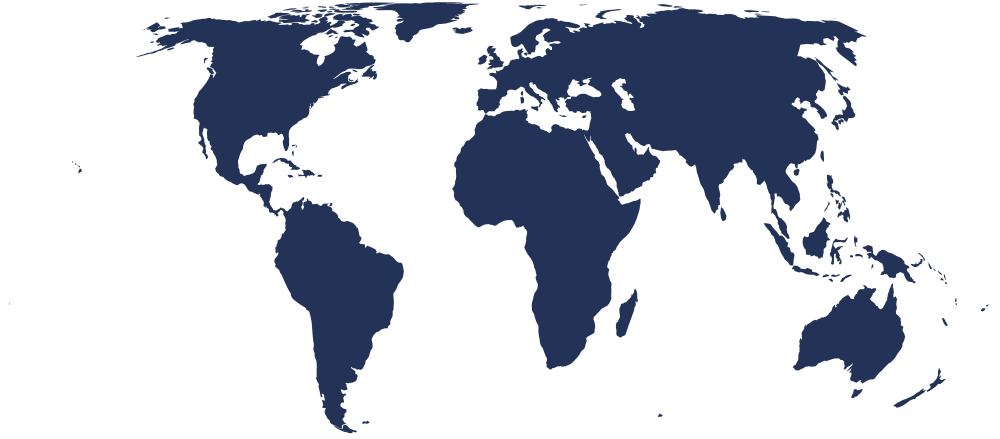
On the world map
Bordering countries
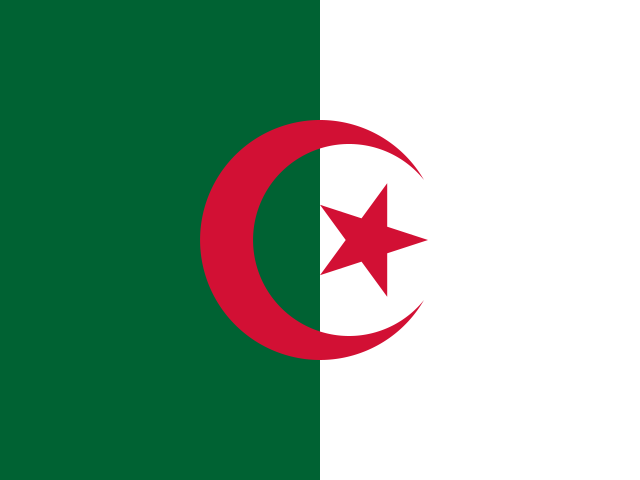 Algeria
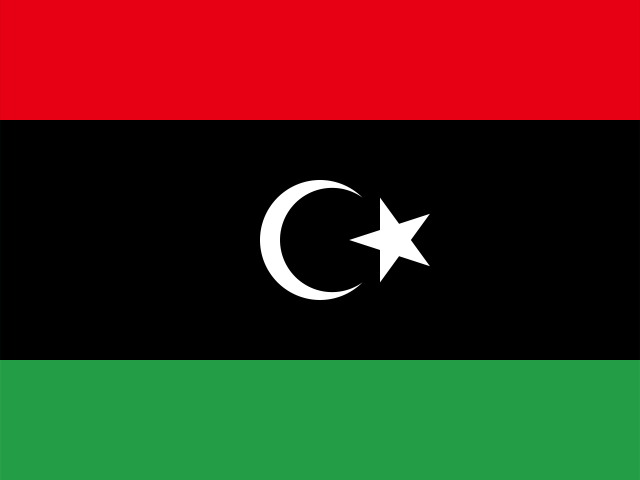 Libya
LibyaCountry facts
- Tunisia was the birthplace of the ancient city of Carthage, one of the most powerful civilizations of the ancient Mediterranean world.
- Arabic is the official language, but French is widely used in business, education, and media.
- The Sahara Desert covers the southern part of Tunisia, offering dramatic landscapes of sand dunes and oases.
- Tunisia sparked the Arab Spring in 2010 when widespread protests led to a historic political transition.
- The national symbol of Tunisia is the crescent and star, which also appears on its red and white flag.
Capital facts
- Tunis is home to the Medina of Tunis, a UNESCO World Heritage Site known for its labyrinthine streets and traditional souks.
- The city has been continuously inhabited for over a thousand years and grew significantly under Aghlabid rule in the 9th century.
- Tunis sits on the shore of the Lake of Tunis, a shallow lagoon connecting the city to the Gulf of Tunis.
- The Bardo National Museum in Tunis houses one of the world's finest collections of ancient Roman mosaics.
- The ruins of ancient Carthage lie just a few kilometers northeast of the modern city center.