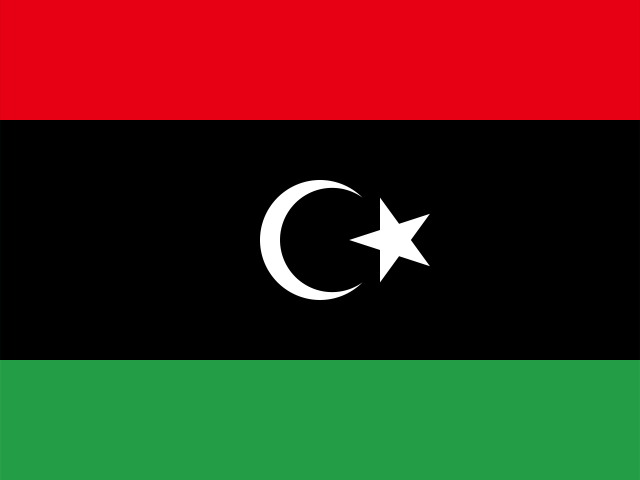
Libya is a large country in North Africa, bordering the Mediterranean Sea to the north and sharing borders with six other countries. It is known for its vast Sahara Desert, which covers most of its territory, and for holding some of the largest proven oil reserves on the African continent. The country also has a rich ancient history, with well-preserved Greek and Roman ruins along its Mediterranean coast.
- Capital
- Tripoli
- Continent
- Africa
- Region
- Northern Africa
- Area
- 1,759,540 km²
- Coordinates
- 25° N, 17° E
- Languages
- Arabic
- Currency
- LYD ل.د
- Domain
- .ly
- Calling code
- +218
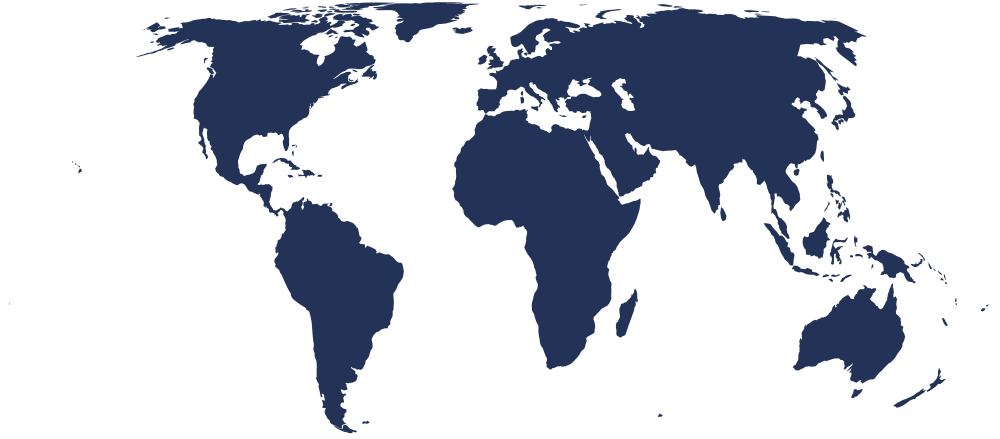
On the world map
Bordering countries
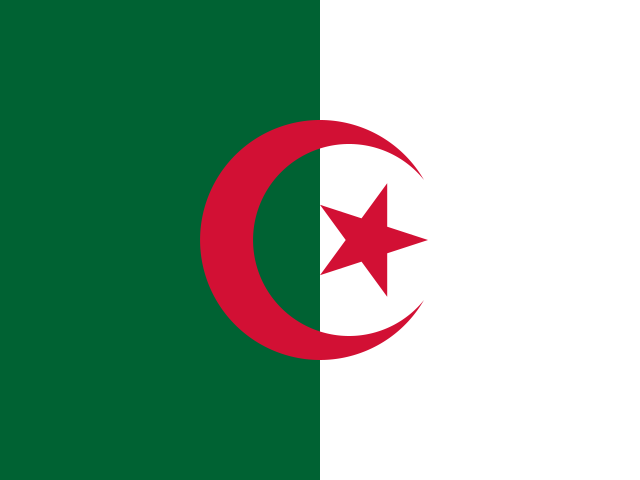 Algeria
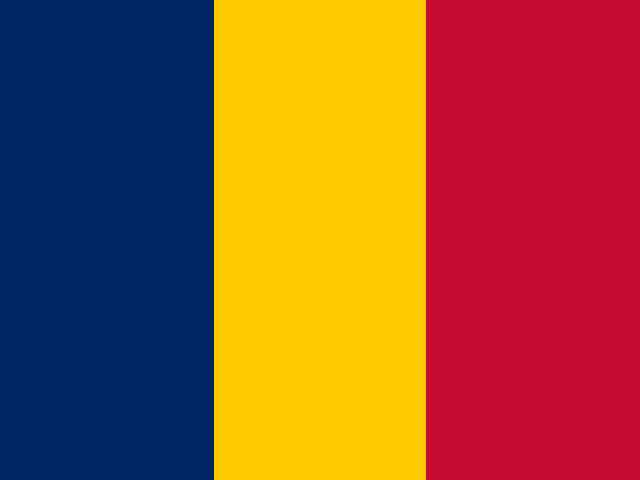 Chad
Chad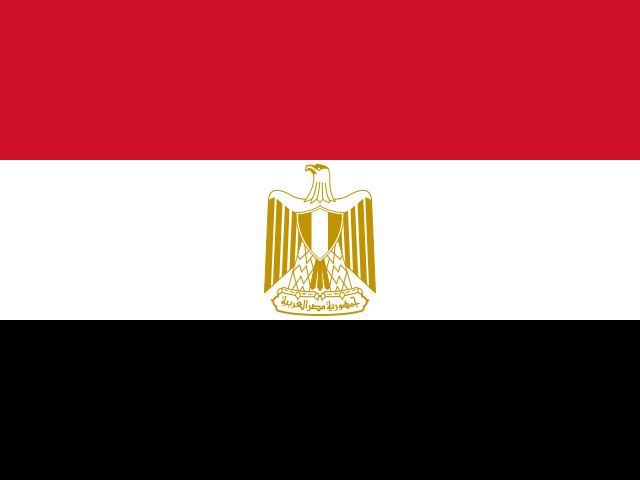 Egypt
Egypt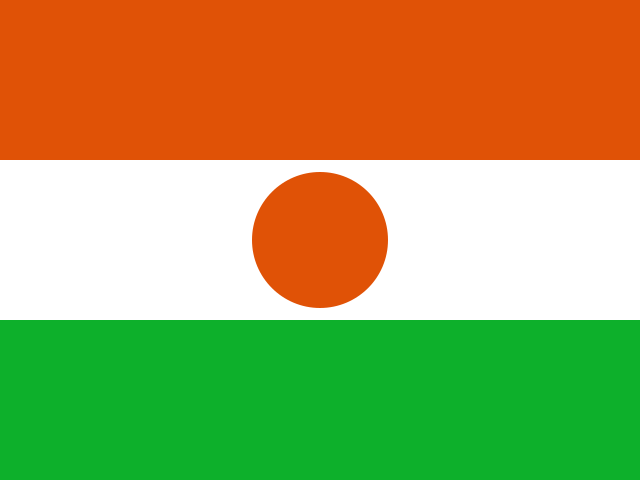 Niger
Niger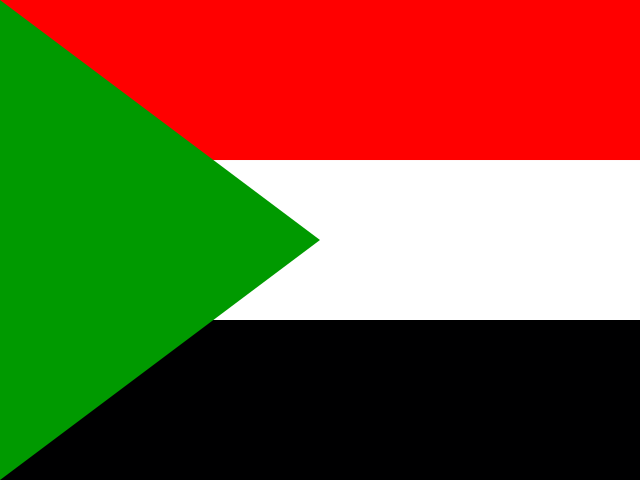 Sudan
Sudan Tunisia
Country facts
- Libya is the fourth largest country in Africa by land area.
- The ancient ruins of Leptis Magna, a UNESCO World Heritage Site, are among the best-preserved Roman cities in the world.
- Arabic is the official language of Libya.
- The Sahara Desert makes up roughly 90 percent of Libya's land, leaving only a narrow fertile strip along the coast.
- Libya gained independence from Italy and joint British-French administration in 1951, becoming the first country to achieve independence through the United Nations.
Capital facts
- Tripoli has served as a major Mediterranean port city for over 2,500 years, with origins tracing back to Phoenician settlers.
- The city's historic old town, known as the Medina, features narrow winding streets, traditional markets, and Ottoman-era architecture.
- Tripoli sits on a peninsula along the northwestern Libyan coast, giving it a natural harbor on the Mediterranean Sea.
- The Arch of Marcus Aurelius, a Roman triumphal arch dating to around 163 CE, still stands in the heart of the old city.
- Tripoli's name derives from the Greek word meaning 'three cities,' reflecting its ancient origins alongside two other nearby settlements.