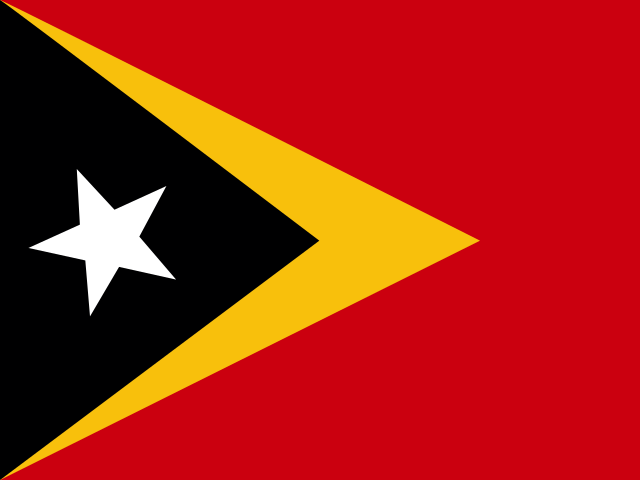
Timor-Leste, also known as East Timor, occupies the eastern half of the island of Timor in Southeast Asia, along with the small enclave of Oecusse on the island's northern coast. It is one of the world's youngest countries, having gained independence in 2002 after decades of Portuguese colonization and Indonesian occupation. The country is known for its rugged mountains, rich coral reefs, and a strong Catholic faith that is central to its national identity.
- Capital
- Dili
- Continent
- Asia
- Region
- South-Eastern Asia
- Area
- 14,874 km²
- Coordinates
- 9° S, 126° E
- Languages
- Portuguese, Tetum
- Currency
- USD $
- Domain
- .tl
- Calling code
- +670
On the world map
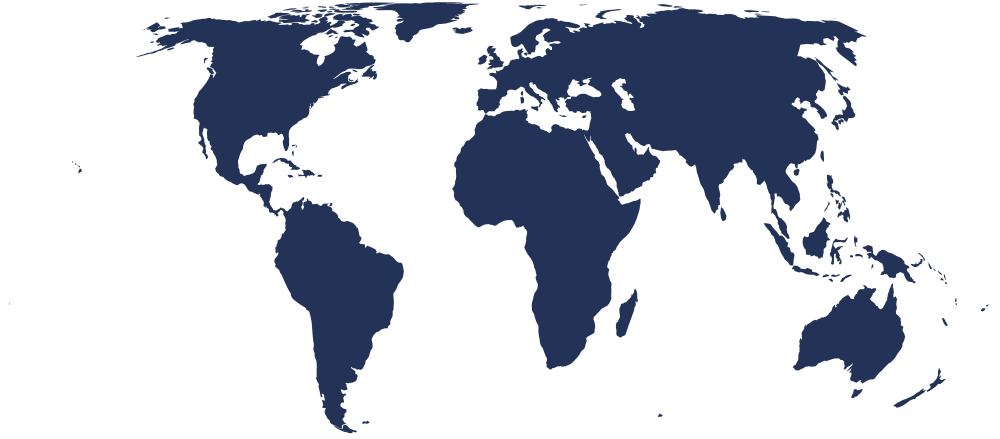
Bordering countries
 Indonesia
Country facts
- Timor-Leste has two official languages: Tetum, a local Austronesian language, and Portuguese.
- The country became fully independent on May 20, 2002, making it the first new sovereign state of the 21st century.
- Coffee is Timor-Leste's most important export crop, grown in the cool highlands and prized for its distinct flavor.
- The Timorese resistance against Indonesian occupation was led for many years by Xanana Gusmão, who later became the country's first president.
- Timor-Leste's waters are part of the Coral Triangle, one of the most biodiverse marine regions on Earth.
Capital facts
- Dili sits on the northern coast of Timor-Leste, facing the Banda Sea, and serves as the country's political and economic center.
- The Cristo Rei of Dili, a large statue of Jesus Christ standing on a hilltop, is one of the city's most recognizable landmarks.
- Dili was established as a Portuguese colonial settlement in the mid-16th century, making it one of the older European-founded towns in the region.
- The Resistance Museum in Dili documents the struggle for independence and is an important site of national memory.
- Dili's waterfront promenade along Avenida de Portugal is a popular gathering place for locals and visitors alike.