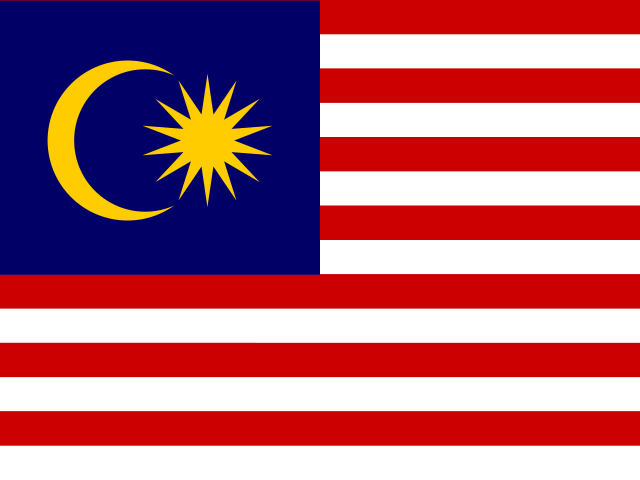
Malaysia is a Southeast Asian country divided between a peninsula bordering Thailand and the island of Borneo, where it shares land borders with Indonesia and Brunei. It is known for its rich cultural diversity, tropical rainforests, and vibrant cuisine shaped by Malay, Chinese, and Indian traditions. The country is also home to some of the oldest rainforests on Earth and iconic modern architecture.
- Capital
- Kuala Lumpur
- Continent
- Asia
- Region
- South-Eastern Asia
- Area
- 330,803 km²
- Coordinates
- 3° N, 113° E
- Languages
- English, Malay
- Currency
- MYR RM
- Domain
- .my
- Calling code
- +60
On the world map
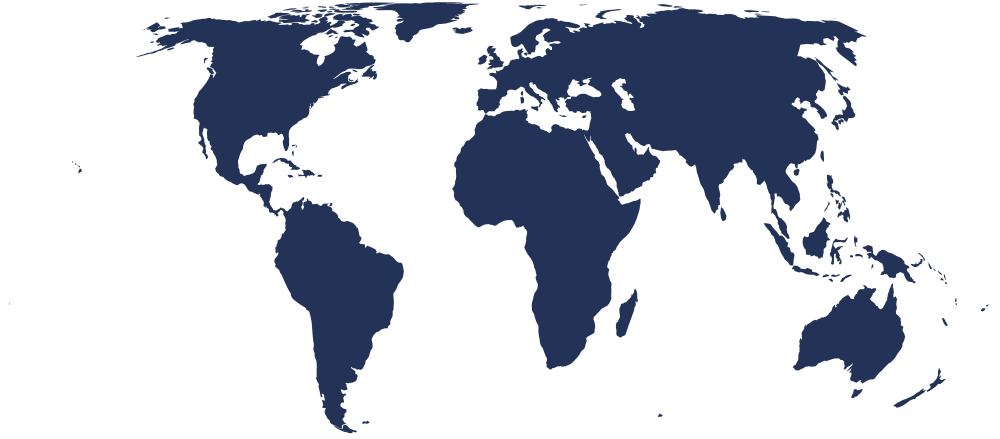
Bordering countries
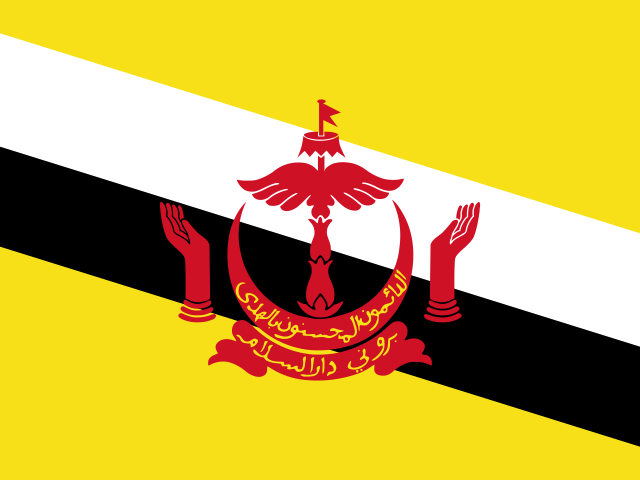 Brunei
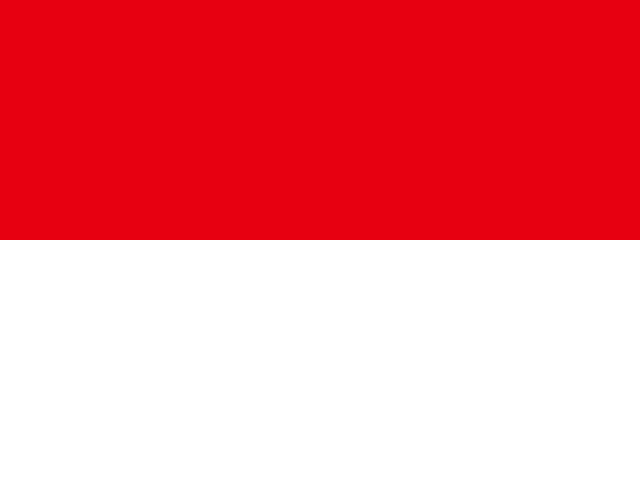 Indonesia
 Thailand
Country facts
- Malaysia gained independence from British rule on 31 August 1957, a date celebrated annually as National Day.
- The Malay language, Bahasa Malaysia, is the official language, though English is widely spoken across the country.
- Malaysia is one of the world's largest producers of palm oil, a crop central to its agricultural economy.
- The rafflesia, the world's largest individual flower by diameter, blooms in Malaysian rainforests on the island of Borneo.
- The national sport of Malaysia is sepak takraw, a traditional game played by kicking a rattan ball over a net.
Capital facts
- Kuala Lumpur's name means 'muddy confluence' in Malay, referring to the meeting point of the Gombak and Klang rivers where the city was founded.
- The city began as a small tin-mining settlement in the 1850s and grew rapidly due to the booming tin trade.
- The Petronas Twin Towers, completed in 1998, were the tallest buildings in the world at the time of their completion.
- Kuala Lumpur is home to the Batu Caves, a series of limestone caves containing Hindu temples that draw millions of visitors each year.
- The city features a striking mix of colonial-era architecture, Islamic-inspired government buildings, and gleaming modern skyscrapers.