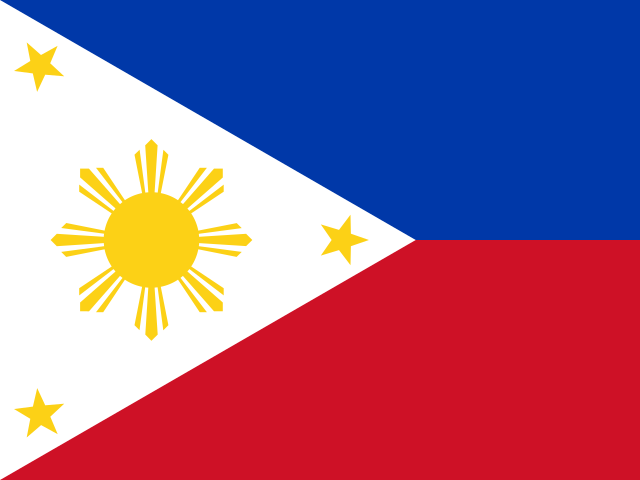
The Philippines is an archipelago of more than 7,000 islands located in Southeast Asia, bordered by the South China Sea to the west and the Pacific Ocean to the east. It is known for its stunning beaches, vibrant festivals, and warm hospitality. The country is one of the most biodiverse nations on Earth, home to unique wildlife found nowhere else.
- Capital
- Manila
- Continent
- Asia
- Region
- South-Eastern Asia
- Area
- 342,353 km²
- Coordinates
- 13° N, 122° E
- Languages
- English, Filipino
- Currency
- PHP ₱
- Domain
- .ph
- Calling code
- +63
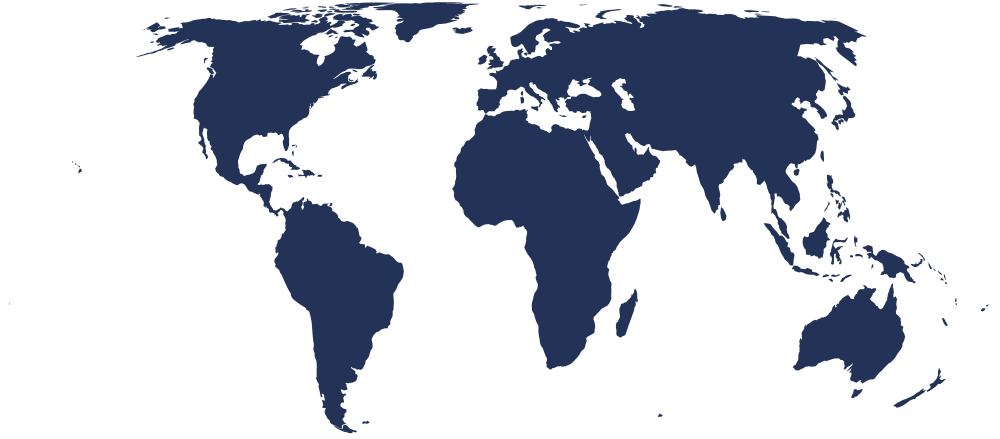
On the world map
Bordering countries
No land borders — this is an island nation.
Country facts
- The Philippines is the only predominantly Christian country in Asia, a legacy of more than three centuries of Spanish colonial rule.
- Filipino and English are both official languages, making the Philippines one of the largest English-speaking countries in the world.
- The archipelago sits along the Pacific Ring of Fire, giving it numerous active volcanoes including the famously picturesque Mayon Volcano.
- The national hero José Rizal, a writer and physician, is celebrated for inspiring the Philippine Revolution against Spanish colonialism in the 19th century.
- The tarsier, one of the world's smallest primates, is native to the Philippines and is found on islands such as Bohol.
Capital facts
- Manila was established as the Spanish colonial capital in 1571 by conquistador Miguel López de Legazpi.
- Intramuros, a walled historic district built during the Spanish era, sits at the heart of old Manila and still contains centuries-old churches and fortifications.
- Manila Bay is famous for its spectacular sunsets and has served as a strategic harbor throughout the city's history.
- The city is home to the University of Santo Tomas, founded in 1611 and one of the oldest universities in Asia.
- Rizal Park, located in central Manila, is a major national landmark and green space dedicated to national hero José Rizal.