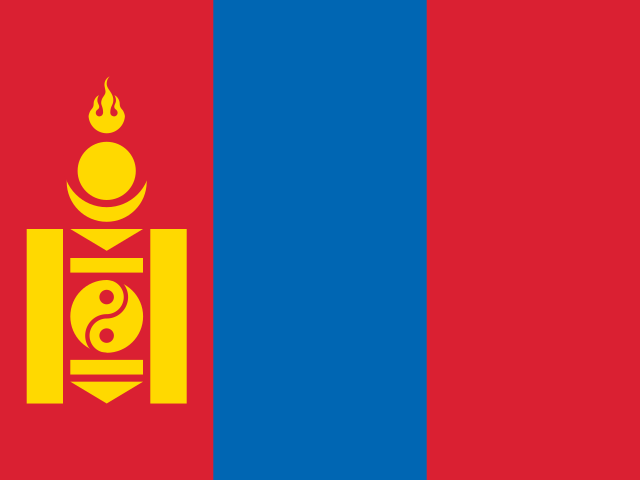
Mongolia is a landlocked country in East and Central Asia, bordered by Russia to the north and China to the south. It is famous for the vast Gobi Desert, expansive grassland steppes, and a proud nomadic heritage. The country was once the heart of the largest contiguous land empire in history, founded by Genghis Khan in the 13th century.
- Capital
- Ulan Bator
- Continent
- Asia
- Region
- Eastern Asia
- Area
- 1,564,110 km²
- Coordinates
- 46° N, 105° E
- Languages
- Mongolian
- Currency
- MNT ₮
- Domain
- .mn
- Calling code
- +976
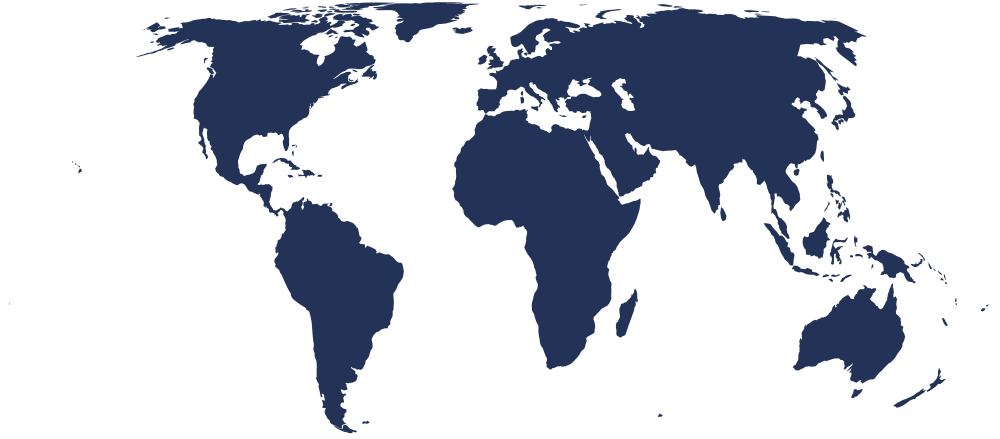
On the world map
Bordering countries
 China
China Russia
Country facts
- Mongolia has one of the lowest population densities of any country in the world, with vast stretches of uninhabited steppe and desert.
- The traditional Mongolian dwelling, called a ger, is a portable round tent that nomadic families can assemble and disassemble in under an hour.
- Naadam is Mongolia's most celebrated festival, featuring the 'three games of men': wrestling, horse racing, and archery.
- The Mongolian script, written vertically from top to bottom, is one of the few vertical scripts still in active use today.
- The Przewalski's horse, considered the last truly wild horse species, was successfully reintroduced to Mongolia after becoming extinct in the wild.
Capital facts
- Ulan Bator, also spelled Ulaanbaatar, sits in a valley along the Tuul River at an elevation of about 1,350 metres, making it one of the highest capital cities in Asia.
- It is widely regarded as the coldest national capital in the world, with winter temperatures regularly dropping below minus 30 degrees Celsius.
- The city is home to Gandantegchinlen Monastery, a major Tibetan Buddhist monastery that remained active even during the Soviet era.
- Ulan Bator grew significantly in the 20th century under Soviet influence, and its urban grid and many older buildings reflect that socialist architectural style.
- Sukhbaatar Square, named after the revolutionary hero Damdin Sükhbaatar, sits at the heart of the city and is the main venue for national ceremonies and public gatherings.