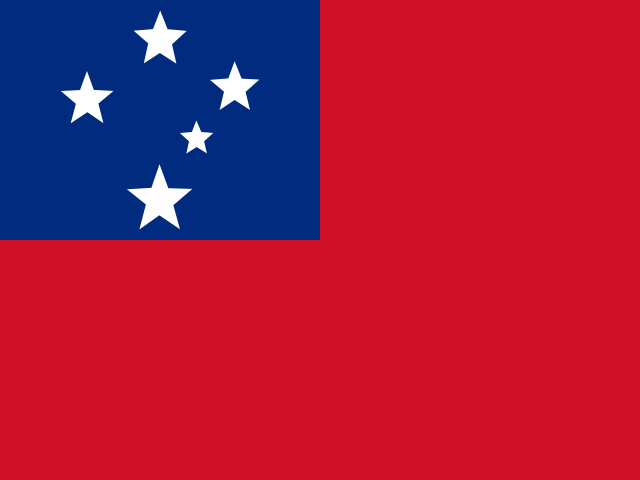
Samoa is a Polynesian island nation located in the central South Pacific Ocean, roughly halfway between Hawaii and New Zealand. It is known for its lush rainforests, pristine beaches, and deeply rooted traditional culture called fa'a Samoa, meaning the Samoan Way. The country consists of two main islands, Upolu and Savai'i, along with several smaller islands.
- Capital
- Apia
- Continent
- Oceania
- Region
- Polynesia
- Area
- 2,842 km²
- Coordinates
- 14° S, 172° W
- Languages
- English, Samoan
- Currency
- WST T
- Domain
- .ws
- Calling code
- +685
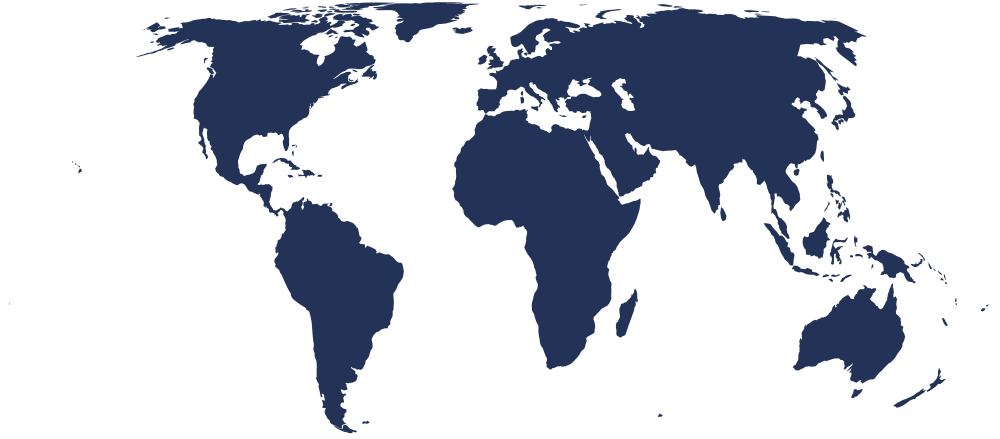
On the world map
Bordering countries
No land borders — this is an island nation.
Country facts
- Samoa was the first Pacific Island nation to gain independence in the twentieth century, achieving it from New Zealand in 1962.
- The traditional Samoan social system, fa'a Samoa, places great importance on extended family, community, and respect for elders.
- Samoan is the official language alongside English, and it is one of the oldest Polynesian languages still widely spoken today.
- The islands were formed by volcanic activity, and Savai'i is home to lava fields from an eruption in the early twentieth century that buried entire villages.
- Rugby union is the most popular sport in Samoa, and the national team has historically punched well above its weight in international competitions.
Capital facts
- Apia is located on the northern coast of Upolu, Samoa's most populous island.
- The city is home to the Robert Louis Stevenson Museum, housed in the villa where the Scottish author lived until his death in 1894.
- Apia's waterfront clock tower is a well-known landmark and a focal point of the town center.
- The Immaculate Conception Cathedral is one of the most prominent religious buildings in Apia, reflecting the country's strong Christian heritage.
- Apia serves as the country's main commercial and administrative hub, hosting government buildings, markets, and the main port.