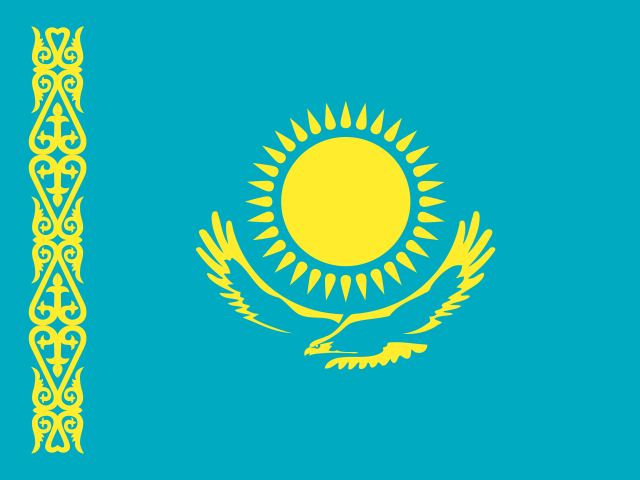
Kazakhstan is a vast landlocked country in Central Asia, bordering Russia, China, and several other nations. It is the world's largest landlocked country, covering a huge expanse of steppe, desert, and mountains. Kazakhstan is known for its rich mineral resources, nomadic heritage, and rapid modernization since independence in 1991.
- Capital
- Astana
- Continent
- Asia
- Region
- Central Asia
- Area
- 2,724,900 km²
- Coordinates
- 48° N, 68° E
- Languages
- Kazakh, Russian
- Currency
- KZT ₸
- Domain
- .kz .қаз
- Calling code
- +7
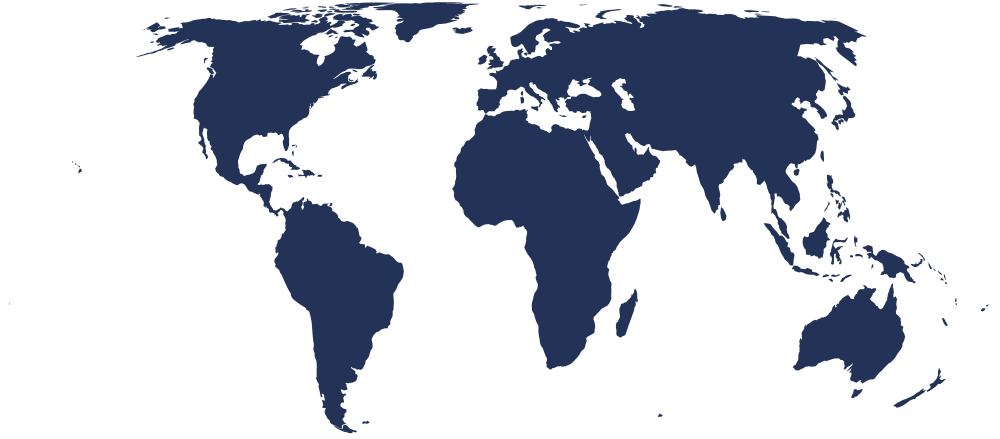
On the world map
Bordering countries
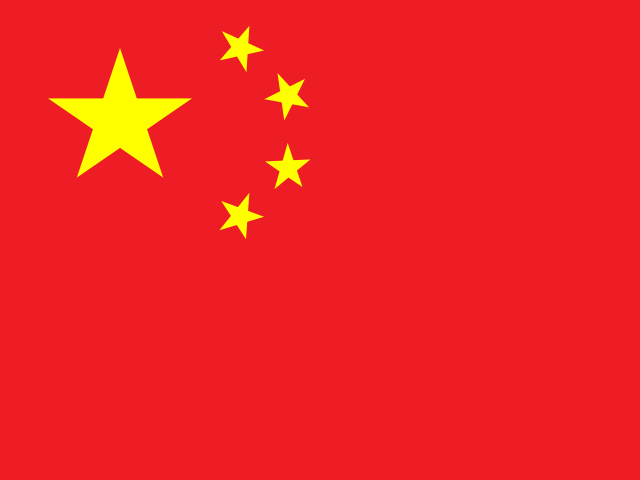 China
China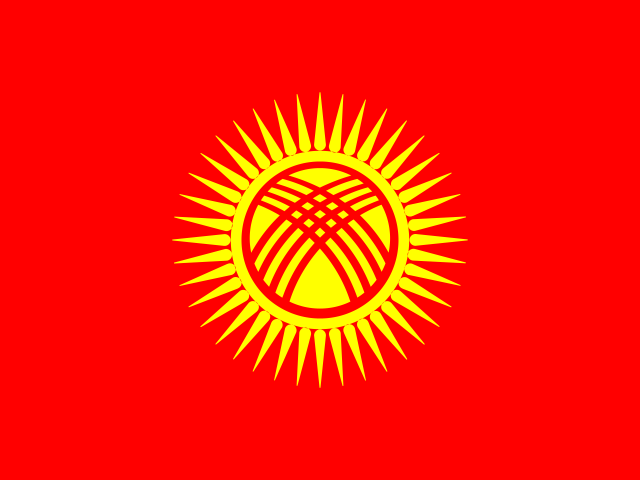 Kyrgyzstan
 Russia
 Turkmenistan
 Uzbekistan
Country facts
- Kazakhstan was the last Soviet republic to declare independence, doing so on December 16, 1991.
- The Kazakh language belongs to the Turkic language family and is written in a Cyrillic alphabet, with a gradual shift to a Latin-based script underway.
- The snow leopard is one of Kazakhstan's most iconic animals and is a national symbol.
- The Baikonur Cosmodrome, located in southern Kazakhstan, was the launch site for Yuri Gagarin's historic 1961 spaceflight.
- Traditional Kazakh culture places great importance on hospitality, and offering guests kumiss — fermented mare's milk — is a cherished custom.
Capital facts
- Astana was designated the capital of Kazakhstan in 1997, replacing Almaty in that role.
- The city was briefly renamed Nur-Sultan between 2019 and 2022 before reverting to its name Astana.
- Astana is home to the Bayterek Tower, a distinctive monument that has become the symbol of the city.
- The capital was largely built from scratch on the flat steppe of northern Kazakhstan, showcasing ambitious futuristic architecture.
- Astana hosts the Palace of Peace and Reconciliation, a striking glass pyramid designed by British architect Norman Foster.